A pretend pet.
A real magnetic force.
Harlan collected magnetic grains from the ground using a magnet inside a plastic bag. Removing the magnet released the grains. Repeating the collection helped separate more of the ordinary dirt.
He made a colorful 3D-printed habitat for the dark grains. A magnet beneath the habitat attracts them, making the pretend pet gather and move.
Story based on the family's description and photos. The pet is a playful name for magnetic grains; it is not alive.
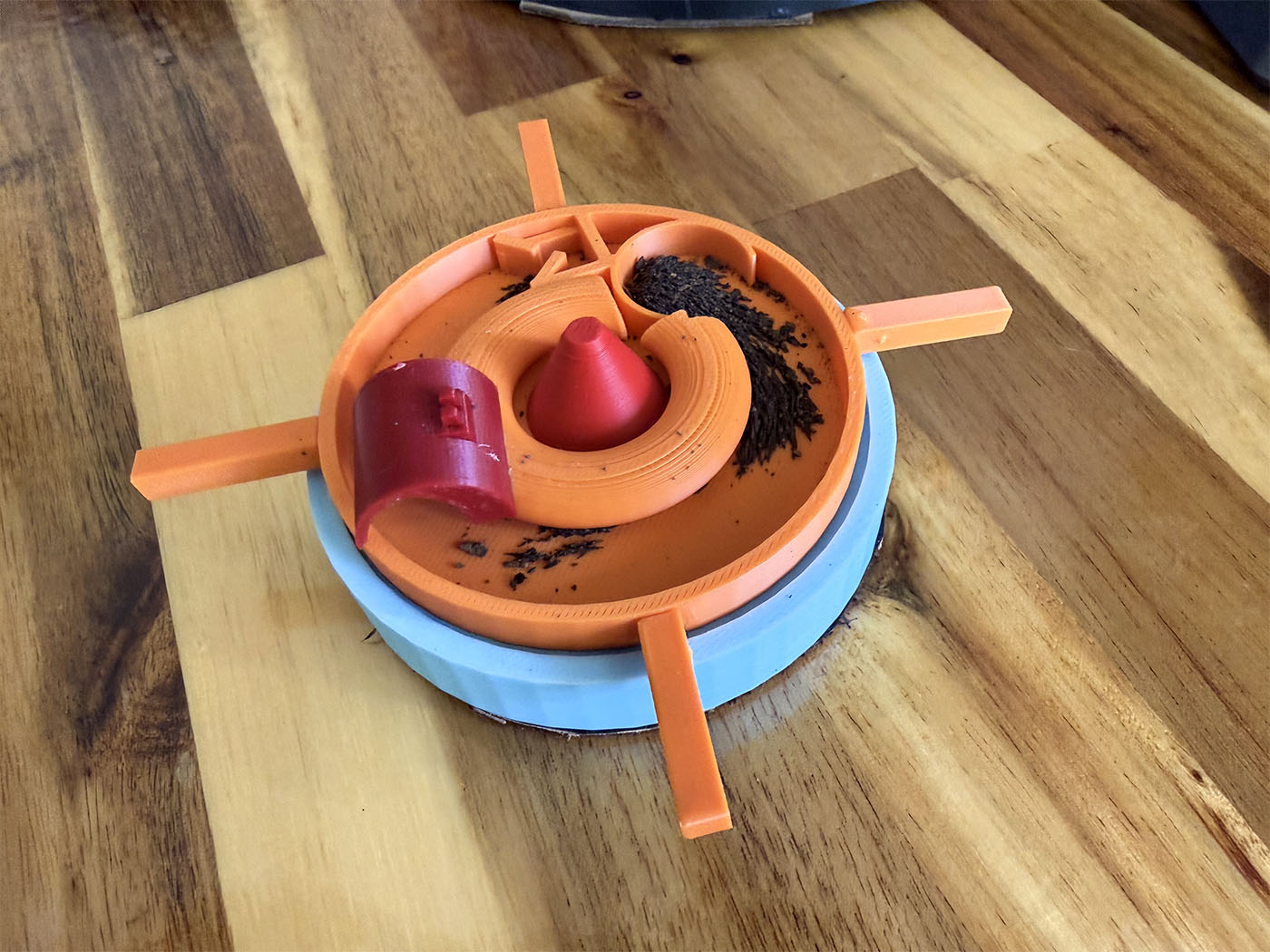
Watch the grains follow.
Explore together.
This is an adult-supervised science demonstration with small particles and a magnet. Keep it away from younger children and pets.
Gather your field kit
- A large handled educational magnet, controlled by a grown-up.
- An intact clear plastic bag that fits over the magnet.
- Two shallow trays, white paper and a spoon.
- A little clean, loose sand or soil from a place a grown-up approves.
- A closed clear observation container for a first experiment.
- The printed habitat, if making the full build.
Make the setup ready
- Keep magnets and grains away from mouths, eyes, food, electronics and medical devices affected by magnets.
- Do not crush rocks, grind metal or make fine powder for this activity. Avoid dusty, contaminated or unknown industrial material.
- A plastic bag helps release grains; it does not make a small loose magnet child-safe.
- Use the magnet's protective housing. A printed recess or friction fit is not a secure magnet enclosure.
- Wash hands, collect spilled grains and put everything away after the experiment.
If anyone might have swallowed a magnet, get medical help immediately. Read the CPSC magnet guidance.
Collect. Release. Repeat.
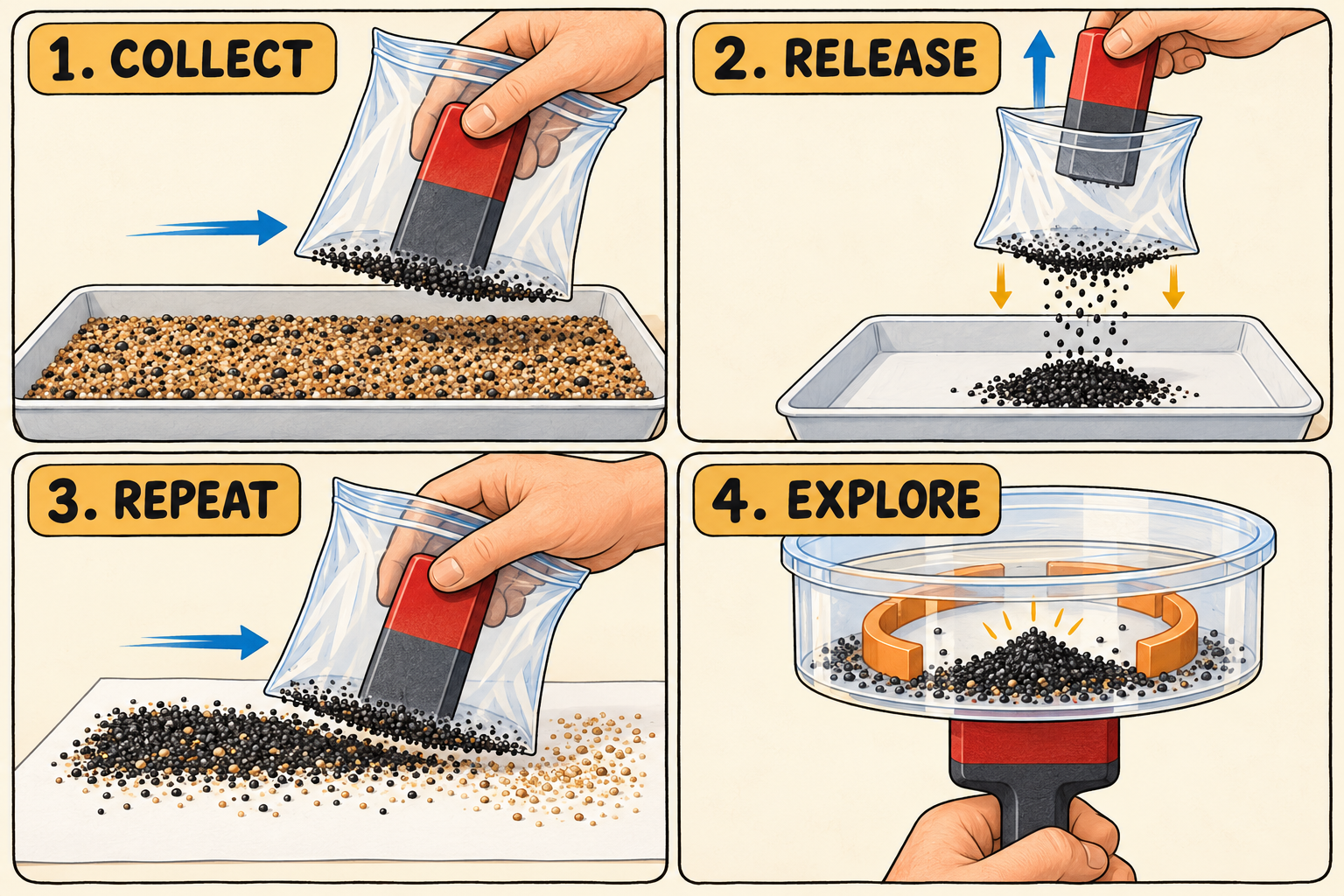
Make a thin layer
With your grown-up, spread a small sample on a tray. Predict which grains will move toward the magnet. Some samples may contain little or no magnetic material.
Collect with the bag
Put the magnet inside the bag. Have the grown-up hold the opening and move the covered magnet slowly just above the sample. Watch for grains sticking to the outside of the bag.
Release into a clean tray
Hold the bag over the second tray. Keep the bag still while lifting the magnet away from its bottom and out through the opening. The grains fall from the outside of the bag into the tray.
Do another pass
Spread the collected grains thinly and repeat with a clean bag. Compare what sticks with what stays behind. Two or three passes are a useful experiment, not a guarantee of pure iron.
Magnetic grains can include iron-bearing minerals such as magnetite, as well as other magnetic material. Attraction to a magnet does not identify a mineral, prove purity or show that a sample is safe to handle. We have not chemically tested Harlan's sample.
The magnets we used.
Harlan's family used two small disc magnets, each 12 mm in diameter and 3 mm thick, bought on Amazon. For grown-ups: a 12 × 3 mm pack from the family's Amazon orders. This is a public product link, not an order or checkout link. That is the magnet size, not a promise that every printed hole will have exactly that clearance.
Check both magnet positions
Have a grown-up identify the two magnet holes in the physical build and measure the printed fit before assembly. Do not stack both magnets in one hole unless the design specifically calls for that arrangement.
The saved main base file has a circular recess measuring approximately 12.0 mm across and 2.0 mm deep in the digital mesh. A 3 mm-thick disc would stand about 1 mm proud of that nominal recess, before printing tolerances. This download is the saved one-recess base version. Check that it matches your intended two-magnet arrangement before printing.
Fit and polarity
Small differences in a printer's calibration can make a nominal 12 mm hole too tight. Do not force a brittle magnet into the print. Check dimensions with calipers and have a grown-up arrange the magnet faces for the intended motion before securing them.
A shallow recess, loose fit or adhesive alone is not a child-safe magnet enclosure. A grown-up must secure magnets so they cannot come free. Keep loose magnets and the unfinished build away from children and pets.
Why does the pet follow?
A field reaches through
A magnet creates a magnetic field around it. Magnetic material can respond even when the magnet is on the other side of paper or a thin plastic floor.
Move the magnet slowly under a closed observation dish. The grains gather near it. Move too far away and they may stop following.
The name is a clue
Magnetic sand pet describes this dry-grain experiment. A ferrofluid is a different material: tiny magnetic particles dispersed in a liquid.
This project does not need an oil, chemical or ferrofluid recipe. Do not add liquids to the habitat based on the name.
The world above.
The magnet below.
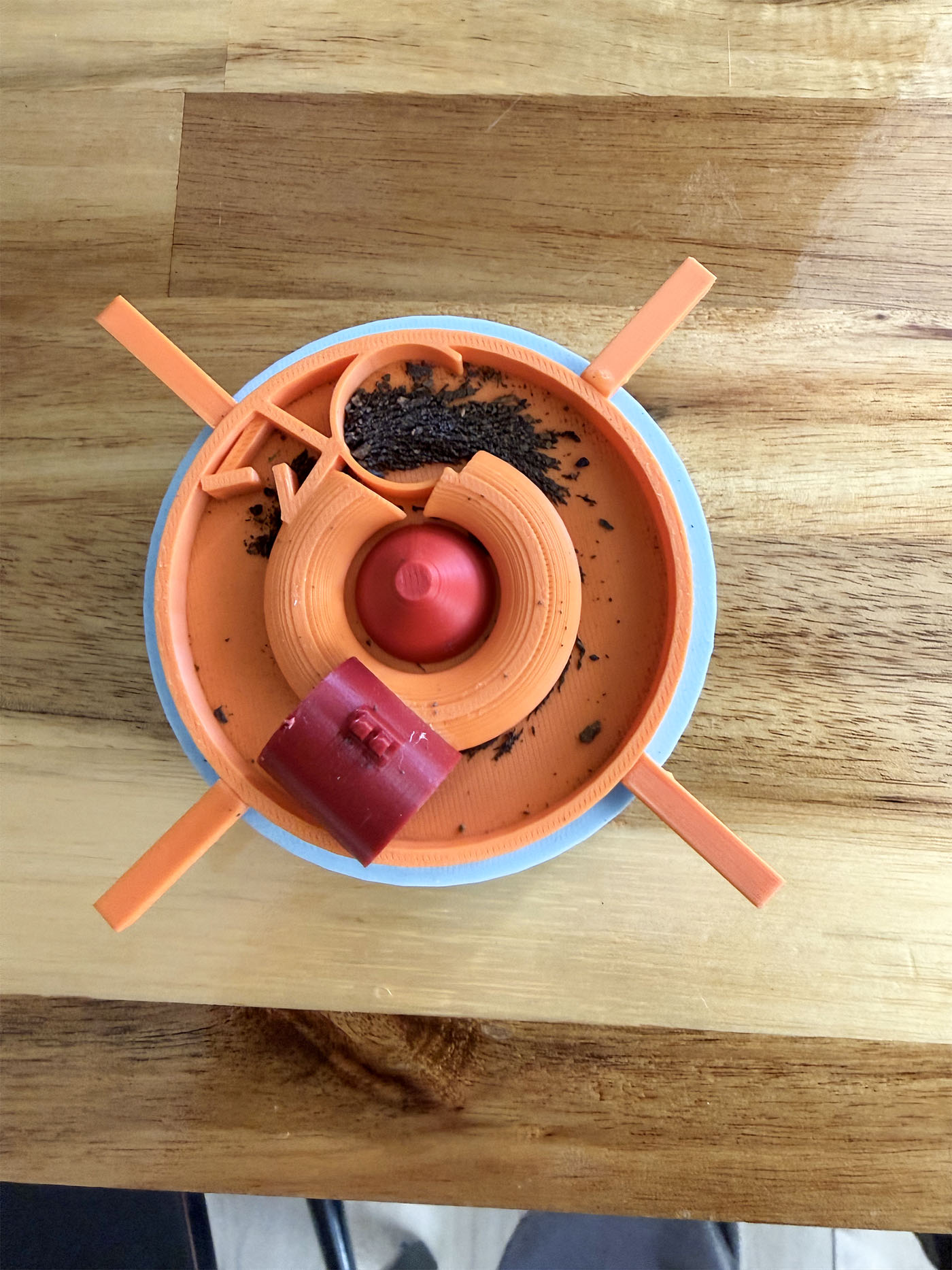
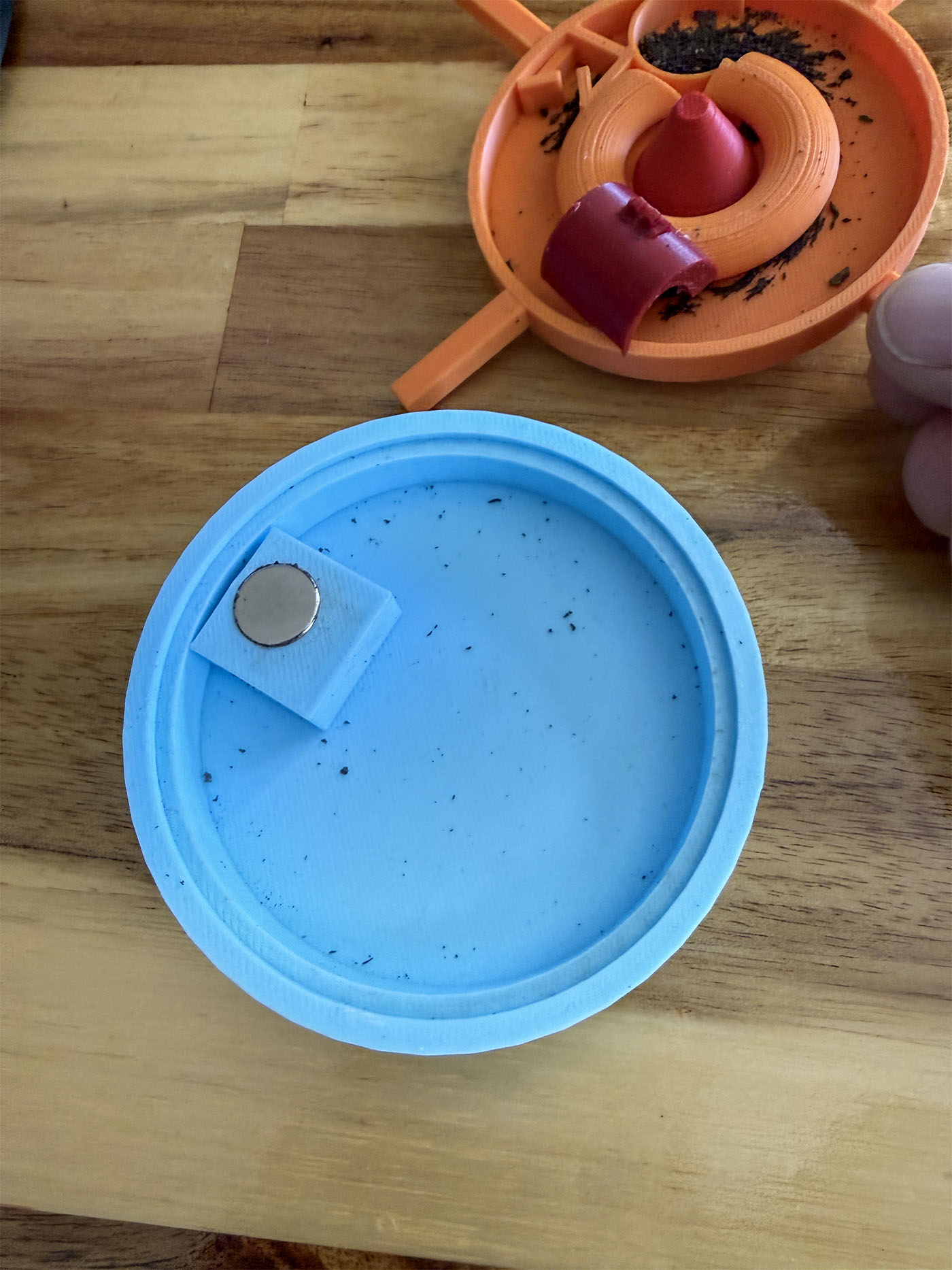
Print a tiny world.
These are Harlan's source designs with clearer download names and plate labels. The Bambu Studio projects contain editable models, not ready-to-run printer instructions. Choose your own printer and slice again.
Open in Bambu Studio
- Open the 3MF as a project.
- Select your actual printer, nozzle, build plate and PLA profile. Reassign colors to the filament you own.
- Keep the original scale. Changing it changes the base fit and magnet recess.
- Check each named plate. Slice and inspect the layer preview, including thin walls, bridges, supports and any mesh warnings.
- Have a grown-up approve the preview and start the print. No printer starts from this website.
Saved settings are starting points from the existing files, not validated profiles for every Bambu printer. Print time, material use and fit depend on your setup.
Which settings are saved?
Both projects save PLA, a 0.4 mm nozzle, 0.16 mm layers, 2 wall loops and 15% infill. The main file saves supports off; the accessory file saves automatic tree supports on. Check overhangs for your chosen orientation before deciding whether to keep those values.
How does it go together?
Print the main habitat and blue base as separate pieces. The main file includes the center cone in the habitat assembly. The tunnel is a separate original STL export. Fit the parts gently without forcing them. The optional accessory file includes a cover/clip design and bars; it has not been verified as a particle-tight lid or a secure magnet enclosure. A grown-up must choose and securely contain the magnet before a child uses the setup. The family used two 12 × 3 mm discs. Verify both printed holes, their clearance and secure retention against the finished build before use.
What has been checked?
The download archives have been checked for integrity, the original model geometry is preserved, and old sliced toolpaths have been removed. The main habitat still reports a non-manifold mesh warning in Bambu Studio; inspect the sliced layers and repair the mesh before printing if your slicer flags it. Digital slicing does not prove a physical fit or certify this as a toy. Ask a grown-up to check the completed build before use.
Change one thing.
See what happens.
Start with a closed clear observation container and an adult-controlled handled magnet. Choose one question. Keep the sample, magnet, path and movement speed the same unless that is the thing you are testing.
Mission A / More passes
Does repeating magnetic separation leave less ordinary sand in the collected sample? Compare the first, second and third pass on white paper. A cleaner-looking sample is not proof of chemical purity.
Mission B / More distance
Can your grains follow through one sheet of paper? Try adding one sheet at a time beneath the closed container. Repeat each setup three times and note when the grains stop following.
My field notes
Write these on paper, or type in the boxes before printing this page. Entries are not submitted or saved; leaving or reloading clears them.
| What I changed | Try 1 | Try 2 | Try 3 | What I noticed |
|---|---|---|---|---|
My conclusion: What did the results show? What would I try differently next time?
Use your browser's Print command to keep your field notes on paper or save a PDF.
Check your explorer skills.
Science references: NASA: what ferrofluid is; Science Buddies: magnetic fields; USGS: iron minerals and identification limits; CPSC: magnet safety; Bambu Studio documentation. Project story and build photos supplied by Harlan's family. Explanatory text and illustration prepared with AI assistance and checked against these sources.